You wake up on a cold Tuesday morning with a dull headache and a slight sense of nausea. You figure it’s just the flu or perhaps you’re just “under the weather.” You brew a pot of coffee over your gas stove, unaware that a cracked heat exchanger in your furnace is silently filling your home with a toxic gas that you cannot see, smell, or taste. By the time you realize something is seriously wrong, your motor skills are fading.
In my ten years of inspecting homes and managing renovations, I’ve seen some terrifying “near misses.” I’ve walked into basements where the water heater vent was knocked loose, pouring combustion byproducts directly into the living space. The scariest part? The homeowners had no idea. A Carbon Monoxide Alarm is not just another gadget on your wall; it is a literal life-support system for your home. It is the only thing standing between a cozy winter night and a tragic headline.
The “Silent Killer” and the Science of Detection
To understand why you need a professional-grade monitoring system, we have to look at what Carbon Monoxide (CO) actually is. It’s a byproduct of incomplete combustion. Whether it’s your gas range, oil furnace, wood-burning fireplace, or an idling car in the garage, anything that burns fuel produces CO.
In the industry, we call it the “Silent Killer” because it is hemodynamically aggressive. When you breathe it in, CO hitches a ride on your red blood cells, displacing the oxygen your brain and heart need to survive. A high-quality Carbon Monoxide Alarm works by using an electrochemical sensor—a small chamber of chemical solution that reacts with CO molecules to produce an electrical current. When that current reaches a specific threshold, the siren triggers.
Why Your Smoke Detector Isn’t Enough
A common mistake I see among beginners is the assumption that their smoke detector will catch everything. I’ve had clients tell me, “I’m safe, I have those 10-year smoke alarms in every room.”
Here is the technical reality: Smoke and CO behave differently. Smoke is composed of particulates and hot gases that rise rapidly. CO is slightly lighter than air but generally mixes evenly throughout the room. More importantly, you can have a deadly CO leak without a single puff of smoke. If you don’t have a dedicated Carbon Monoxide Alarm, you are essentially flying blind in a cockpit without a fuel gauge.
Analogy: The Invisible Security Guard
Think of a Carbon Monoxide Alarm like a specialized security guard who only looks for one specific, invisible intruder.
While your smoke alarm is looking for the “loud” intruder (fire and smoke) who kicks down the door, the CO alarm is watching for the “ghost” who slips through the vents. The guard doesn’t wait for the ghost to start a fire; he smells the ghost’s “breath” (the chemical reaction in the sensor) and starts screaming before the ghost can reach your bedroom.
Technical Specifications: Choosing Your Shield
When you go to buy a monitor, don’t just grab the cheapest one off the shelf. As an expert, I look for three specific technical features:
1. UL 2034 Certification
In the United States, this is the gold standard. It ensures the device has been tested to trigger at specific concentrations (measured in PPM or Parts Per Million). A certified alarm won’t give you “nuisance alarms” for tiny, harmless fluctuations, but it will scream the moment levels become dangerous over time.
2. End-of-Life Signal
CO sensors do not last forever. The chemicals inside the electrochemical cell eventually dry out. Most modern units last between 5 to 10 years. You want a unit that has a distinct “End-of-Life” chirp—different from the “Low Battery” chirp—so you know exactly when the hardware is no longer protecting you.
3. Digital Display vs. Basic Siren
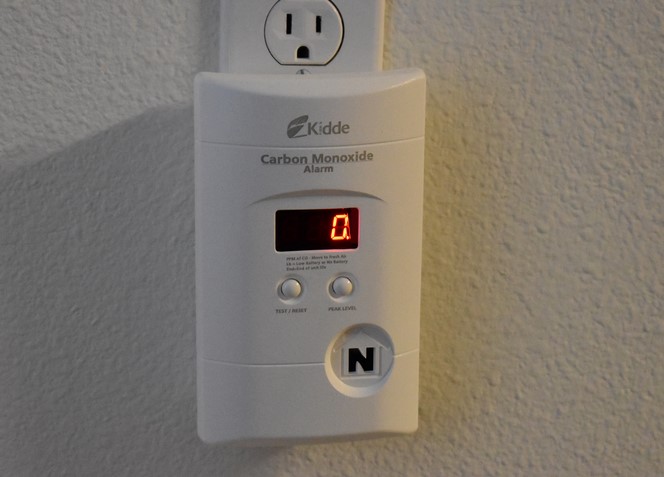
I always recommend units with a Digital Display. Why? Because it allows for Real-Time Monitoring. A basic alarm only sounds when levels are high. A digital display might show you a reading of 20 PPM. While not immediately lethal, that 20 PPM tells me as a technician that your furnace is “bleeding” and needs a repair before it hits 100 PPM.
Strategic Placement: Where Every Second Counts
I’ve walked into homes where the CO alarm was plugged into an outlet behind a couch in the basement. That is a decorative paperweight, not a safety device.
-
The Bedroom Rule: You must have an alarm in the hallway outside every separate sleeping area. If you sleep with the door closed, put one inside the room. Most CO deaths happen while people are sleeping and unable to recognize the symptoms of poisoning.
-
The 15-Foot Rule: Keep alarms at least 15 feet away from fuel-burning appliances. If it’s too close to your stove, “startup” CO (a tiny puff when you first click the igniter) can cause false alarms.
-
The Height Myth: You’ll hear people say CO alarms must be low because CO is heavy, or high because it’s light. The truth? CO mixes quite well with the air. Placement at eye level is best so you can easily see the “Peak Level” memory button and the digital display.
💡 Pro Tip: The “Peak Level” Check
Most modern Carbon Monoxide Alarm units have a “Peak Level” button. Once a month, when you test the battery, press this button. It will show you the highest CO reading the device has sensed since it was last reset. If it shows “30” and you haven’t heard an alarm, you have a slow leak that needs professional investigation immediately.
Maintenance and the “Interconnect” Advantage
If you are modernizing a home, I highly suggest Interconnected Alarms. If a leak starts in the furnace room in the basement, you want the alarm in your second-floor master bedroom to go off instantly.
-
Battery Backup: Even if your alarms are hardwired, ensure they have a battery backup. Power outages often happen during storms when people are most likely to use portable generators or fireplaces—two major CO sources.
-
The “Nuisance” Warning: Never install a CO alarm in a garage. The concentrated exhaust from starting your car will ruin the sensor and lead to constant false triggers.
Understanding the Symptoms: The Human Element
As a home expert, I don’t just care about the house; I care about the people in it. If your Carbon Monoxide Alarm goes off, do not ignore it.
CO poisoning symptoms often mimic the flu:
-
Headache and Dizziness
-
Weakness and Upset Stomach
-
Confusion
-
Chest Pain
If the alarm sounds, get everyone (including pets) outside into fresh air immediately. Call the fire department or your gas utility company from outside. Do not open the windows until the fire department has arrived to take an “ambient air” reading—they need to find the source of the leak, and airing out the house can hide the evidence.
Conclusion: Investing in Peace of Mind
We spend thousands of dollars on granite countertops, smart refrigerators, and hardwood floors. But the most important piece of “smart tech” in your home is the one that costs less than fifty dollars.
A Carbon Monoxide Alarm is a silent sentinel. It doesn’t ask for much—just a fresh battery and a test once a month—but in return, it gives you the freedom to sleep soundly, knowing that your family is protected from an invisible threat. In my ten years in this industry, I’ve seen many things broken and fixed, but you can’t fix a life lost to a preventable leak.
When was the last time you checked the “mfg date” on the back of your CO alarm? If it’s more than 7 years old, it might be time for an upgrade. Have you had your furnace or water heater inspected this year? Let’s talk about home safety in the comments—I’d love to help you ensure your “safe haven” actually stays safe!