I was working on a commercial workshop retrofit early in my career when a close call changed how I view electrical safety forever. I was deep inside an exposed ceiling grid, carefully swapping out a faulty 240-volt industrial lighting ballast. I had personally flipped the corresponding circuit breaker to the “OFF” position before climbing up. Suddenly, the wires in my hand sparked violently, blinding me for a split second and nearly throwing me off the ladder.
Downstairs, a well-meaning janitor had walked past the main distribution board, noticed a breaker was tripped, and casually flipped it back on to restore power to a hallway. He had no idea someone’s life was literally hanging on that line.
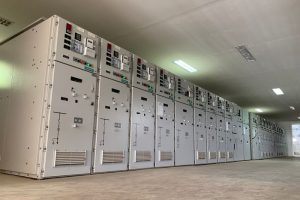
In my ten-plus years of navigating residential and industrial electrical systems, I’ve learned that electrical safety isn’t just about using insulated tools or wearing rubber-soled boots. True security lies in physical perimeter control. Whether you are managing a bustling light-industrial warehouse or optimizing a high-powered home DIY workshop, integrating a heavy-duty breaker panel lock into your electrical infrastructure is the ultimate line of defense against catastrophic human error.
The Psychology of Electrical Hazards: The Invisible Threat
Electrical currents are inherently silent, odorless, and completely invisible. Unlike a spinning table saw blade or an open flame, you cannot visually confirm if a copper busbar is energized just by looking at it. This lack of sensory feedback makes electrical infrastructure highly vulnerable to accidental reactivation.
Think of your electrical distribution board like a railway switching yard. The circuit breakers act as directional gates, guiding high-amperage current through specific lanes of your building. If an unauthorized person flips a switch out of sequence, it’s equivalent to sending a high-speed freight train down an occupied track.
[Maintenance Zone] ──> Worker Disconnects Circuit ──> Enters Danger Area
                                                            │
                                                            ▼
[Breaker Panel]    ──> External Interlocking Lock  ──> Prevents Accidental Re-energization
By installing a physical barrier like a breaker panel lock, you take control of the switching yard, ensuring that no one can change the tracks without your explicit authorization.
Technical Architecture of the Breaker Panel Lock
When it comes to securing electrical infrastructure, you cannot rely on flimsy plastic latches. True industrial-grade security requires a combination of structural hardware and strict operational protocols.
1. External Panel Door Enclosure Locks
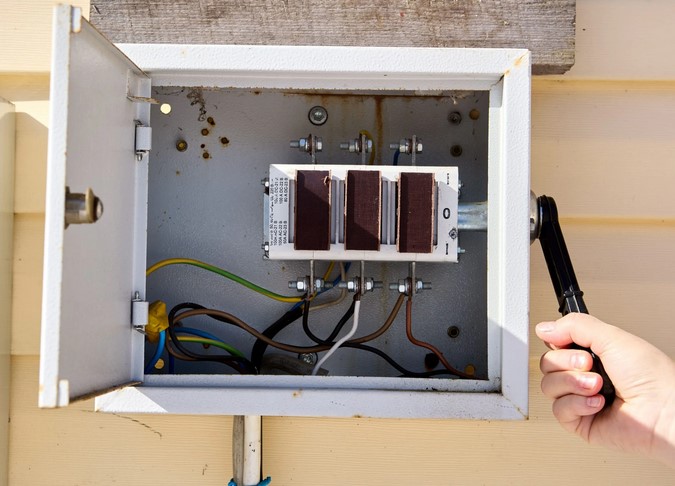
The first line of defense is securing the outer door of the service panel itself. Many commercial panels come equipped with basic flush-mount thumb turns, but these can be easily bypassed with a screwdriver or a generic utility key.
-
The Padlock Hasp Retrofit: A high-security upgrade involves mounting a heavy-gauge steel interlocking hasp to the exterior rim of the panel box. This allows you to deploy a robust, pick-resistant padlock with a hardened steel shackle.
-
Material Integrity: Look for locks constructed from non-conductive, spark-resistant materials like reinforced nylon or die-cast aluminum alloys to prevent secondary grounding hazards if an internal arc fault occurs.
2. Internal Circuit Breaker Lockout/Tagout (LOTO) Devices
Securing the outer door is excellent for general security, but what if multiple contractors are working on different circuits within the same open panel? This is where localized lockout devices become critical.
┌──────────────────────────────────────────────────────────────────┐
│                    TYPES OF INTERNAL LOCKS                       │
├───────────────────┬──────────────────────────────────────────────┤
│ Lock Type         │ Mechanical Engagement                        │
├───────────────────┼──────────────────────────────────────────────┤
│ Clamp-On Breaker  │ Uses a thumbscrew to grip the toggle switch  │
│ Universal Multi   │ Bridges across multiple adjacent tie-bars   │
│ Oversized Handle  │ Encloses extra-large industrial main switches│
└───────────────────┴──────────────────────────────────────────────┘
A localized breaker panel lock clamps directly onto the plastic toggle switch of an individual circuit breaker. Once tightened down, a sliding shroud covers the screw mechanism, and a padlock is inserted through the assembly. This makes it mechanically impossible for anyone to physically force the breaker handle into the “ON” position.
Implementing an Industrial-Grade Safety Protocol
Buying the hardware is only half the battle. To ensure absolute reliability, you need to establish a strict operational workflow. In the professional contracting world, we call this the Lockout/Tagout (LOTO) system, and it follows a highly disciplined sequence.
Phase 1: High-Definition Isolation
Before touching any wiring, identify the exact breaker controlling your destination zone. Flip the toggle switch to the full “OFF” position. Don’t assume the panel map penciled on the inside door is accurate—older buildings often have mislabeled paths due to sloppy historical modifications.
Phase 2: Mechanical Interlocking Calibration
Attach your specialized circuit breaker panel lock directly to the deactivated switch handle. Turn the internal clamping dial until it firmly bites into the plastic toggle housing. Snap the protective cover shut and slide your personal padlock through the alignment hole.
Phase 3: The Zero-Energy Verification Test
This is the step that saves lives. After locking down the panel, return to your active work area. Use a calibrated, non-contact digital voltage tester or a true-RMS multimeter to check the wires. Verify across all phases (Line to Neutral, Line to Ground) to guarantee that the line is completely dead before stripping any insulation.
The Danger of “Shared Neutral” Back-Feeding
Here is an advanced electrical warning that every intermediate DIYer and facility manager must memorize: Beware of shared neutrals in multi-wire branch circuits.
If a previous installer ran a single neutral wire to service two separate hot lines (a common cost-saving practice in older construction), that neutral wire can still carry active return current even if you have successfully deployed a breaker panel lock on one of the hot circuits. If you open that neutral junction while someone is drawing power on the paired circuit, you will become the path of least resistance to ground.
Pro Tip: When locking down a circuit for maintenance, always use a circuit analyzer tool to verify if it shares a neutral path with an adjacent breaker. If a shared neutral configuration is detected, you must isolate and lock out both coupled circuit breakers simultaneously before commencing any structural work.
Upgrade Your Security Profile Today
Electrical safety isn’t the place to cut corners or hope for the best. By spending a few dollars on a high-quality breaker panel lock, you eliminate the human element of risk from your maintenance tasks. You ensure that your workspace remains isolated, your equipment stays protected, and your people stay safe.
Take a walk out to your electrical panel tonight. Inspect the door latch, look over your circuit directory, and evaluate how vulnerable your setup is to accidental interference.
What kind of electrical modifications or safety upgrades are you planning for your workshop or facility this year? Drop a comment below with your panel configurations, and let’s engineer a foolproof security layout together!