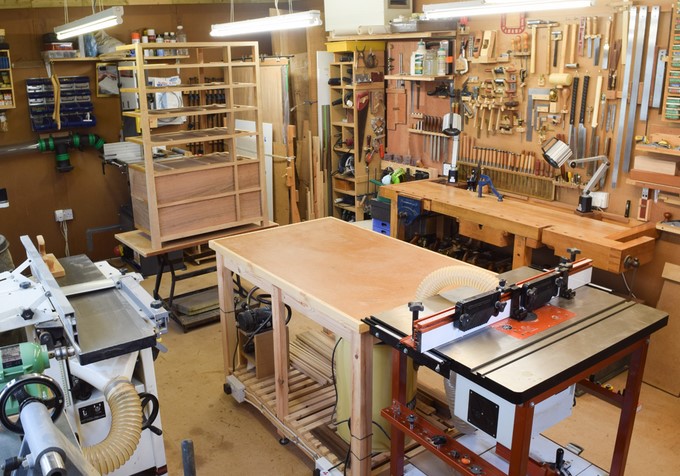
Picture this: You are in the middle of fixing a leaky faucet or assembling a piece of furniture. Your hands are covered in grease, the water is shut off, and you need that one specific medium-sized Phillips-head screwdriver. You dive into your toolbox, rummaging through a chaotic metallic sea of pliers, wrenches, and loose screws, only to pull out three flatheads in a row. By the time you find the right tool, fifteen minutes have vanished, your knuckles are scraped, and your frustration levels are through the roof.
In my ten years of remodeling homes and optimizing workshops, I’ve seen this exact scenario play out hundreds of times. Homeowners think they need a massive, multi-thousand-dollar garage renovation to feel organized. The truth is, high-impact budget upgrades don’t require a massive bank account; they require smart spatial geometry.
Let’s look at how a simple, targeted project like building or installing a dedicated screwdriver wall rack can completely transform your workflow efficiency without breaking the bank.
The Psychology of the Tool Bench: Why Small Changes Yield Massive ROI
In the world of professional contracting, we talk a lot about “kinetic economy”—the art of minimizing wasted movement. Think of your workshop or DIY corner like a commercial kitchen line cook’s station. A chef doesn’t store their primary knife at the bottom of a dark drawer; it sits on a magnetic strip right at eye level. Your most frequently used hand tools deserve the exact same real estate.
When you transition your tools from a deep, cluttered chest to an open-air vertical plane, you aren’t just cleaning up; you are upgrading your brain’s cognitive bandwidth. You eliminate the micro-frustrations that stall your momentum during a project.
[Cluttered Toolbox] ──> Search Fatigue ──> Lost Project Momentum
                                                 │
                                                 ▼
[Vertical Wall Rack] ──> Instant Retrieval ──> Fluid DIY Workflow
By focusing your energy on high-visibility, low-cost budget upgrades, you build momentum for larger home improvement tasks down the line.
Engineering the Ultimate Screwdriver Wall Rack
A screwdriver wall rack is one of those deceptive projects. It looks incredibly straightforward, but if you don’t account for tool geometry and center of gravity, you will end up with a rack that drops tools every time you slam the garage door.
Over the years, I’ve engineered a foolproof DIY design using scrap lumber that outperforms almost any cheap plastic organizer you can buy online.
1. Material Selection and Dimensioning
To build a rack that stands the test of time, skip the brittle pine and opt for a dense hardwood scrap like oak or maple, or a high-grade Baltic birch plywood. You want a piece of timber that is roughly 2 inches wide, 1 inch thick, and as long as your tool collection dictates (usually 12 to 18 inches).
-
The Clearance Ratio: Standard driver shafts range from 1/8 inch to 3/8 inch in diameter, but their handles can be up to 1.5 inches wide.
-
Hole Spacing: Space your drill holes at least 1.75 inches apart from center to center. If you crowd the holes, the handles will overlap, making it impossible to grab one tool without knocking its neighbor out of alignment.
2. The Step-Drilling Technical Secret
Here is an insider trick you won’t find in a standard instruction manual: don’t drill uniform holes straight through the wood.
Because screwdrivers are top-heavy—the heavy acetate or rubberized handle sits entirely above the rack—a simple straight hole allows the tool to wobble. Instead, use a drill press or a steady hand with a handheld driver to create countersunk stepped holes.
       [Screwdriver Handle]
       ══════════╤══════════
                 │
   ┌───┐         │         ┌───┐  <- Wide Countersink (Holds Handle Base)
   │   └─────────┼─────────┘   │
   │     ┌───────┼───────┐     │  <- Narrow Pilot Hole (Guides Shaft)
   └───  │       │       │  ───┘
         │       │       │
                 │
         [Tool Shaft]
By drilling a wider, shallow hole halfway through the top face (using a Forstner bit) and a narrower pilot hole all the way through the bottom, the flared base of the tool handle sits snugly inside the wood. This simple mechanical detail locks the tool into a perfectly vertical position.
Alternative Budget Upgrades: Magnetic and Acrylic Variations
If you don’t have the woodworking tools to fabricate a timber rack from scratch, don’t worry. There are several highly effective, low-cost adaptations that fit perfectly into the budget upgrades ecosystem.
The Heavy-Duty Magnetic Strip Conversion
Rare-earth neodymium magnetic bars are incredibly cheap and offer immense structural versatility.
-
Installation: Mount a 12-inch magnetic strip directly to your drywall studs or a sheet of pegboard.
-
The Advantage: This system completely eliminates the need to lift a tool up and out of a hole. You simply slap the steel shaft against the magnet.
-
The Catch: Over time, high-vibration environments can cause heavy, vintage wooden-handled drivers to slide downward. Use magnets for your lightweight precision drivers and structural wood racks for your heavy-duty demo drivers.
Upcycled PVC Conduit Racks
If you have leftover schedules of PVC pipe from a plumbing repair, you can slice 1-inch thin-wall PVC conduit into 3-inch long segments. Angling the tops at 45 degrees allows you to screw them individually to a backing board, creating individual structural holsters for every single driver in your arsenal.
Deployment Strategy: Where to Mount Your Assets
Location is everything. Mounting your newly completed screwdriver wall rack in a dark corner behind a stack of storage totes defeats the entire purpose of the upgrade.
-
The Primary Strike Zone: Mount your rack between 48 inches and 60 inches off the floor. This places the handles exactly between your chest and eye level, allowing for natural, ergonomic access without bending or stretching.
-
The Sub-Panel Anchor: If you utilize a mobile rolling tool cart, anchor the rack directly to the exterior side panel of the cart using self-tapping sheet metal screws. This keeps your essential hand tools moving with you as you navigate around a vehicle or a project layout space.
Pro Tip: Organize your drivers by tip profile (all Phillips together, all Flatheads together, followed by Torx and Hex drivers), and sort them from longest shaft to shortest shaft going left to right. This creates an instant visual checklist. If there is a gaping hole in your gradient line, you know immediately that a tool was left behind on the job site.
Watch Out for Drywall Shear Stress
When mounting any custom tool storage system to a wall, never rely solely on plastic drywall anchors. A full set of professional-grade screwdrivers can easily weigh 5 to 10 pounds. Constant pulling and tugging forces will quickly loosen plastic anchors, widening the drywall hole until the entire system sags or pulls free.
Always locate the structural wall studs using a stud finder and anchor your rack directly into solid timber using 2.5-inch cabinet screws. If the spacing doesn’t align with your studs, mount a horizontal plywood backer board to the studs first, then secure your tool organizing racks directly to that backer board.
Elevate Your Space One Project at a Time
Taking control of your workshop doesn’t mean emptying your wallet on a premium garage overhaul. By focusing on targeted, hyper-functional budget upgrades like a custom screwdriver wall rack, you eliminate spatial friction, protect your tool investments, and build the practical confidence needed for complex home maintenance tasks.
It’s time to stop digging through the junk drawer and start engineering a workspace that works as hard as you do.
What is the single most frustrating, unorganized area on your current workbench or tool wall? Drop a comment below with your workspace setup, and let’s brainstorm a low-cost, high-impact organizational solution to fix it!