I’ve spent over a decade walking through properties—from boutique hotels to high-end vacation rentals—and I’ve noticed a recurring nightmare. A guest checks in, tired from a long flight, looking forward to a hot shower, only to find a lukewarm trickle of water or a toilet that sounds like a jet engine every time it flushes. In the hospitality world, the guest bathroom is the “make or break” zone. You can have the plushest bed in the world, but if the bathroom feels inefficient or outdated, your guest’s rating will plummet faster than a dropped tile.
In my years of hands-on experience, I’ve learned that a high-efficiency bathroom isn’t just about saving a few cents on the water bill. It’s about asset optimization. It’s about creating a space that feels luxurious to the guest while being a breeze for maintenance and a champion for your overhead costs. Think of your bathroom like a high-performance watch; the gears inside need to be precise and durable, even if the guest only sees the polished face.
The Foundation of High-Efficiency: Water Management Systems
When we talk about efficiency in a guest bathroom, the conversation usually starts and ends with water. In a hospitality setting, your fixtures endure ten times the wear and tear of a standard residential home. Guests aren’t always gentle. They leave taps running, they use too much toilet paper, and they expect instant hot water.
Low-Flow Fixtures That Don’t Feel “Low”
The biggest mistake I see beginners make is installing cheap low-flow showerheads that feel like being spit on by a polite cat. You want High-Efficiency Toilets (HET) and aerated showerheads. Modern technology allows us to use air-induction to increase water pressure while using significantly less volume.
I personally recommend looking for the WaterSense label. It’s the gold standard for a reason. By switching to a 1.28 gallon-per-flush (GPF) toilet, you are looking at a 20% to 60% reduction in water usage compared to older models. Imagine that multiplied by twenty rooms over an entire year. That is a massive chunk of change back in your pocket.
Smart Leak Detection: Your Invisible Insurance
I once consulted for a property owner who lost $4,000 in a single month because of a silent leak in a third-floor suite. The guest didn’t report it because they thought the “hissing” was just part of the plumbing. Installing smart leak detectors or flow meters is a pro move. These devices sit on your main line or under the vanity and alert your phone the second they detect an unusual constant flow. In the hospitality business, water damage is the silent asset killer.
Material Selection: Durability Meets Aesthetics
Efficiency isn’t just about water; it’s about maintenance time. If your housekeeping team spends 45 minutes scrubbing grout lines in a single guest bathroom, your labor costs are bleeding you dry.
The Death of Traditional Grout
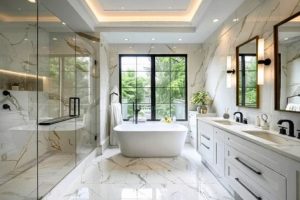
If you are still using 1-inch mosaic tiles with white grout on a bathroom floor, you are essentially inviting stains to stay for dinner. For high-efficiency design, I always push for large-format porcelain tiles.
Why? Fewer grout lines. Fewer grout lines mean less surface area for mold and soap scum to hide. Porcelain is also nearly non-porous, meaning it won’t soak up that spilled bottle of hair dye a guest might leave behind.
Pro Tip: When selecting hardware like faucets and towel bars, avoid polished chrome. It shows every fingerprint and water spot. Go with brushed nickel or PVD finishes. They look cleaner for longer, reducing the “touch-up” time for your cleaning staff.
The Vanity of Longevity
Avoid MDF (Medium-Density Fiberboard) at all costs. In a humid environment like a bathroom, MDF is a ticking time bomb. It absorbs moisture, swells, and eventually falls apart. Invest in solid wood or plywood vanities with quartz countertops. Quartz is a beast; it’s heat-resistant, stain-resistant, and doesn’t require the annual sealing that granite or marble demands.
Lighting and Climate: The Sensory Efficiency
A guest bathroom should feel like a sanctuary, but it shouldn’t cost a fortune to light or ventilate. This is where many owners overlook the “technical data” for the sake of a pretty lamp.
LED Evolution and CRI
We are long past the days of flickering blue-ish fluorescent lights. However, not all LEDs are equal. For a hospitality asset, you need bulbs with a high Color Rendering Index (CRI)—ideally 90 or above. This ensures that when guests are applying makeup or shaving, they see their true skin tone.
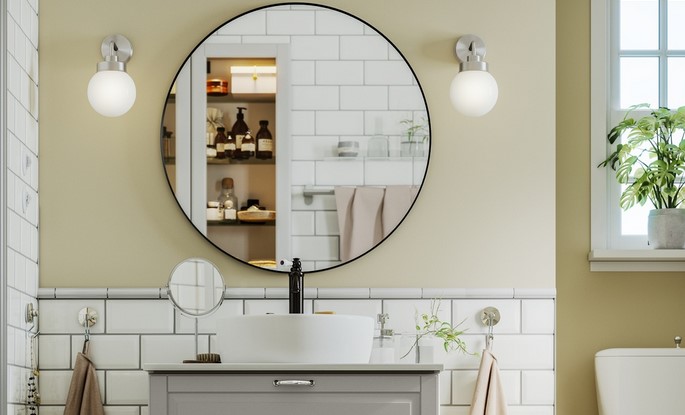
High-efficiency LED strips behind a mirror provide a “halo” effect that feels expensive but consumes less power than a single traditional incandescent bulb. It’s all about the “lumen-per-watt” ratio.
Advanced Ventilation Systems
Nothing destroys a bathroom faster than steam. If your exhaust fan sounds like a lawnmower, guests won’t turn it on. If they don’t turn it on, the moisture stays, and the paint starts to peel.
I suggest installing humidity-sensing fans. These turn on automatically when they detect a rise in moisture levels and stay on until the air is dry. It takes the “choice” away from the guest and protects your drywall and cabinetry from rot.
The Hidden Power of Layout and Accessibility
Efficiency also relates to how a human moves through the space. A cramped guest bathroom is an invitation for accidents and broken fixtures.
The “Dry Zone” vs. “Wet Zone”
Try to keep your vanity (the dry zone) clearly separated from the shower/toilet (the wet zone). If you have the space, a “walk-in” shower with a glass partition instead of a curtain is a game-changer. Curtains are high-maintenance—they get moldy and need constant washing. A fixed glass panel can be squeegeed in 10 seconds.
Universal Design and ADA Compliance
Even if you aren’t legally required to meet ADA (Americans with Disabilities Act) standards in every room, adopting Universal Design principles is smart business. This includes:
-
Curbless showers (no tripping hazards).
-
Grab bars that double as stylish towel racks.
-
Wider doorways.
By making the bathroom accessible to everyone, from a young athlete to an elderly traveler, you increase the “rentability” of your asset.
Technical Maintenance: A Checklist for Success
To truly optimize your assets, you need a preventative maintenance schedule. Think of this as the “oil change” for your bathroom.
-
Quarterly Aerator Cleaning: Unscrew the faucet heads and soak them in vinegar to remove mineral buildup. This maintains that “strong pressure” feel guests love.
-
Annual Valve Inspections: Check the shut-off valves under the sink and behind the toilet. They tend to seize up if not turned once in a while.
-
Silicone Re-Caulking: Don’t wait for the caulk to turn black. Refresh it every 18-24 months to keep the “new” look.
Hidden Warning: Watch out for “flushable” wipes. There is no such thing as a flushable wipe in the world of hospitality plumbing. I highly recommend placing a small, visible sign or a stylish bin specifically for wipes to save yourself a $300 late-night plumber call.
Conclusion: Investing in the Details
Optimizing a guest bathroom is a balancing act. You are juggling the guest’s desire for a spa-like experience with your own need for a durable, low-cost, and high-efficiency asset. By focusing on high-quality water fixtures, durable materials like quartz and porcelain, and smart tech like humidity-sensing fans, you aren’t just spending money—you’re protecting your investment.
Remember, a guest might forget the color of the curtains, but they will always remember a great shower and a clean, functional space.
Are you planning a renovation for your rental property or boutique hotel? What’s the biggest “bathroom fail” you’ve encountered as a guest or an owner? Let’s discuss in the comments below!