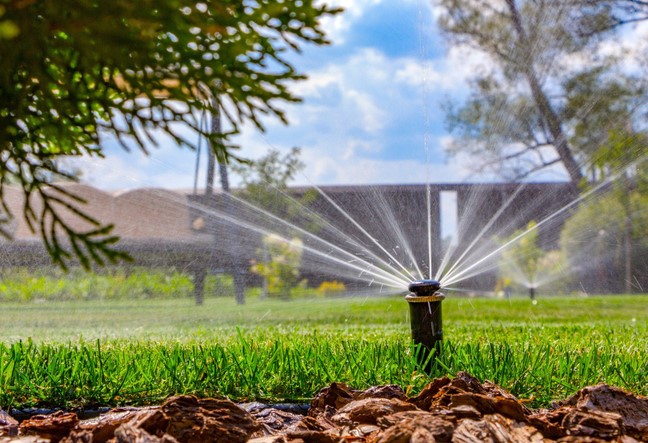
It was a blistering Tuesday afternoon when my neighbor pulled up to his driveway, only to find his lawn sprinklers blasting away in the middle of a torrential downpour. Hundreds of gallons of treated municipal water were washing straight down the storm drain alongside his hard-earned money.
In my ten-plus years of residential home improvement and smart home integration, I see this exact scenario play out every single summer. Traditional clock-based timers blindly dump water on landscapes regardless of soil moisture, humidity levels, or local rainfall. According to EPA estimates, up to 50% of residential outdoor water use is wasted due to inefficient irrigation systems.
Upgrading your landscape setup with a smart sprinkler controller changes the game completely. By leveraging real-time weather data, soil profiles, and automated scheduling, you transition from wasteful calendar watering to precision environmental resource management.
The Efficiency Engine: Traditional Timers vs. Smart Automation
Standard mechanical timers operate on simple countdown clocks. They turn solenoid valves on and off at fixed intervals, treating your lawn identically whether it’s a humid 65-degree morning or a scorching 95-degree heatwave.
Integrating an intelligent smart sprinkler controller replaces rigid schedules with dynamic evapotranspiration (ET) calculations. The system calculates water loss based on local solar radiation, wind speed, air temperature, and relative humidity, delivering only what your plants need to thrive.
+-----------------------------------------------------------------------+
|                    IRRIGATION CONTROLLER COMPARISON                   |
+--------------------------+---------------------+----------------------+
| Feature / Metric         | Legacy Clock Timer  | Smart Controller     |
+--------------------------+---------------------+----------------------+
| Weather Adaptation       | None (Manual Skip)  | Automatic (Hyperlocal)|
| Water Savings Potential  | Baseline (0%)       | 30% – 50% Reduction  |
| Control Interface        | Dial / Punch Buttons| Smartphone App / Voice|
| Zone Customization       | Basic Runtime Only  | Soil, Slope & Shade  |
| Flow Leak Detection      | No                  | Yes (with Flow Meter)|
+--------------------------+---------------------+----------------------+
Think of a traditional irrigation timer like an old-fashioned microwave that cooks every meal for five minutes regardless of food density. A smart controller acts like a modern oven equipped with thermal sensors—adjusting temperature and time continuously to cook everything perfectly without burning.
Technical Architecture: How Smart Controllers Optimize Zones
Understanding the internal tech stack of modern controllers helps you configure your setup for maximum efficiency and plant health.
Hyperlocal Weather Intelligence
Smart controllers connect to local weather stations via Wi-Fi or cellular hubs. If a rain front moves through your neighborhood, the system automatically triggers a rain skip or freeze skip, pausing scheduled watering cycles without any manual intervention.
Advanced Zone Tailoring
Every lawn has unique microclimates. Quality smart controllers allow you to program distinct attributes for each individual valve zone:
-
Vegetation Type: Turfgrass, shrubs, annual flower beds, or native xeriscaping.
-
Soil Texture Profile: Clay (slow intake), loam (balanced), or sand (rapid drainage).
-
Sun Exposure: Full sun, partial shade, or heavy canopy cover.
-
Slope Gradient: Flat, moderate incline, or steep hillsides.
Step-by-Step Blueprint: Installing Your Smart Sprinkler Controller
Swapping out an ancient, clunky timer for a sleek, connected hub is one of the most rewarding 30-minute DIY projects you can tackle. Here is how to execute a clean retrofitting process.
       [ STEP 1 ]             [ STEP 2 ]             [ STEP 3 ]             [ STEP 4 ]
+----------------------+   +--------------+   +----------------------+   +----------------------+
| Power Disconnect &   |-->| Wall Mounting|-->| Terminal Wiring      |-->| App Pair, Wi-Fi &    |
| Legacy Wire Tagging  |   | & Anchoring  |   | Connections          |  | Zone Configuration   |
+----------------------+   +--------------+   +----------------------+   +----------------------+
Step 1: Documenting Legacy Wiring
Before disconnecting anything, shut off main power to the existing controller. Remove the protective front plate and take a clear, high-resolution photo of your wire terminal block.
Identify the Common wire (typically white and labeled ‘C’) and individual Zone wires (numbered 1 through 16). Tag each wire with colored painter’s tape to avoid confusion during reconnects.
Step 2: Mounting and Terminal Connections
Mount your new smart hub near an electrical outlet and within range of your home Wi-Fi network. If mounting outdoors, install the unit inside an IP65-rated weatherproof enclosure.
-
Insert the Common wire into the designated ‘C’ terminal spring latch on the smart controller.
-
Connect your Zone wires into their respective numbered slots (1, 2, 3, etc.).
-
If your system uses a Master Valve or Pump Start Relay, insert that dedicated line into the ‘P/MV’ terminal slot.
Step 3: Wi-Fi Calibration and App Onboarding
Plug in the power transformer, download the manufacturer’s companion mobile app, and follow the step-by-step Bluetooth or QR code pairing sequence. Once connected to your 2.4 GHz Wi-Fi band, assign custom names and photos to each landscape zone.
Expert Advice: Pro Tips and Hidden Pitfalls
Over a decade of retrofitting home automation and irrigation hardware has taught me that software settings matter just as much as correct wire installation.
Hidden Warning: Never run all zones on standard flat schedules during peak daylight hours! Watering between 10:00 AM and 4:00 PM leads to massive evaporation loss before moisture ever reaches plant roots. Always set runtimes to complete just before sunrise.
Keep these operational guidelines in mind to maximize landscape performance:
-
Utilize Cycle-and-Soak: Clay soils absorb water slowly. Enable your controller’s Cycle-and-Soak feature, which breaks a 20-minute watering session into four 5-minute bursts separated by resting periods to eliminate runoff.
-
Verify Master Valve Settings: If your property relies on a well pump or index valve, ensure the Master Valve setting is enabled in the software app; otherwise, zone valves will click open without water pressure behind them.
-
Audit Sprinkler Nozzles Annually: A smart controller cannot fix broken pop-up spray heads or misaligned rotor nozzles. Inspect hardware physically every spring to clear debris and replace clogged heads.
Troubleshooting Common Connectivity and Zone Issues
If a zone fails to fire or your system drops offline unexpectedly, use this quick reference matrix to isolate the fault.
+---------------------------------------------------------------------------------+
|                        IRRIGATION TROUBLESHOOTING GUIDE                        |
+----------------------+--------------------------+-------------------------------+
| Symptom Observed     | Underlying Cause         | Recommended Corrective Action |
+----------------------+--------------------------+-------------------------------+
| System Stays Offline | Weak 2.4 GHz Wi-Fi Signal| Install Wi-Fi range extender  |
| Single Zone Silent   | Loose Wire / Bad Solenoid| Check C-terminal; test ohms   |
| All Zones Dead       | Tripped Master Valve / MV| Verify MV terminal assignment |
| Water Keeps Running  | Debris in Valve Diaphragm| Flush inline solenoid valve   |
+----------------------+--------------------------+-------------------------------+
When diagnosing individual zone failures using a multimeter, measure resistance across the zone wire and the common wire. A healthy 24V AC solenoid coil typically reads between 20 and 60 ohms. A reading below 10 ohms indicates a direct short, while an infinite reading signals a severed wire underground.
Smart Automation Drives Real Environmental Value
Upgrading to an intelligent smart sprinkler controller is an investment that pays for itself quickly through reduced municipal water bills and healthier landscape root structures. By merging precise weather forecasting with smart zone customization, you eliminate guesswork and build a sustainable, fully automated outdoor ecosystem.
Are you currently retrofitting an old sprinkler clock or looking for the best Wi-Fi controller for your yard setup? Drop your questions, zone count, or current yard challenges in the comments below—I’d love to help you build an efficient setup!