I still distinctly recall a home consultation I conducted for a client a couple of years ago during peak spring pollen season. She kept her windows tightly shut, vacuumed religiously, and yet woke up every morning with a stuffy nose, scratchy throat, and persistent fatigue.
When I took out my laser particle counter to audit her indoor environment, the readings were staggering: millions of microscopic particulates were suspended right in her primary living area. Her HVAC filter was doing its best, but it was never designed to trap sub-micron irritants circulating in her breathing zone.
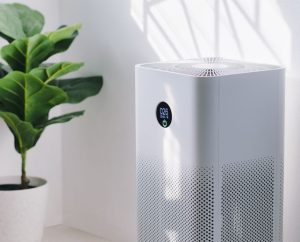
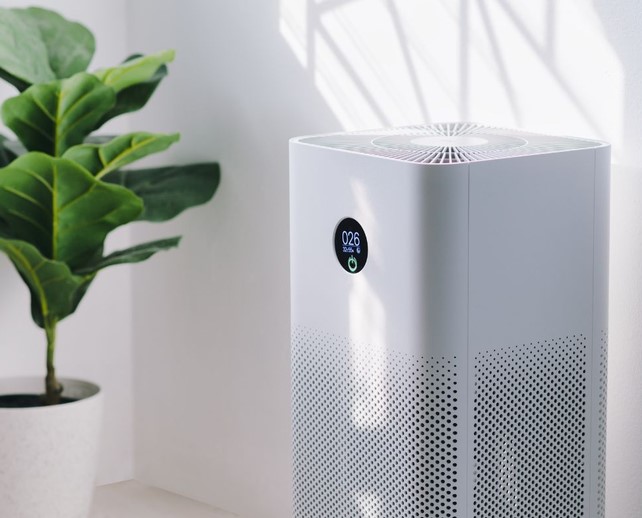
According to EPA studies, indoor air can actually be two to five times more polluted than outdoor air. Integrating a high-performance air purifier HEPA system into your home layout is one of the most effective ways to actively filter out airborne irritants, protect respiratory health, and restore clean air to your living space.
The Physics of Filtration: True HEPA vs. Marketing Gimmicks
In my ten-plus years of evaluating residential HVAC and indoor air quality (IAQ) equipment, I have seen endless confusion surrounding air filtration terminology. Terms like “HEPA-type,” “HEPA-like,” or “99% effective” are frequently used on retail packaging, yet they lack strict filtration certifications.
A authentic air purifier HEPA setup utilizes a True HEPA filter, certified under international standards (such as DOE or EN 1822) to trap at least 99.97% of airborne particles down to 0.3 microns in diameter.
+-----------------------------------------------------------------------+
|                    AIR FILTRATION TIER COMPARISON                     |
+--------------------------+---------------------+----------------------+
| Filter Classification    | Efficiency Rating   | Target Particulates  |
+--------------------------+---------------------+----------------------+
| Standard MERV 8 (HVAC)   | ~70% at 3.0-10 µm   | Dust, Lint, Carpet   |
| HEPA-Type / Synthetic    | ~85-95% at 2.0 µm   | Pollen, Large Dust   |
| True HEPA (H13 Grade)    | 99.97% at 0.3 µm    | Mold, Smoke, Dander  |
| Medical-Grade (H14)      | 99.995% at 0.1 µm   | Viruses, Ultrafines  |
+--------------------------+---------------------+----------------------+
Think of a True HEPA filter like a microscopic mesh net designed to catch tiny organisms. While coarse sea nets easily let small fish slide through, a fine HEPA matrix traps microscopic particulates through a combination of interception, impaction, and diffusion mechanisms.
Technical Specifications: CADR, ACH, and Airflow Mechanics
Choosing an air filtration unit requires looking beyond aesthetic design. To guarantee proper air turnover, you must match the machine’s technical specifications directly to your room’s cubic volume.
Clean Air Delivery Rate (CADR)
Rated in cubic feet per minute (CFM), CADR measures an air cleaner’s throughput efficiency for three specific pollutant categories: Smoke, Dust, and Pollen.
-
Rule of Thumb: Your unit’s Smoke CADR rating should equal at least two-thirds of the room’s total floor area in square feet (assuming standard 8-foot ceilings).
Air Changes Per Hour (ACH)
For noticeable health benefits, an air purifier HEPA unit must achieve an ACH rating of 4x to 5x. This means the total volume of air inside the room passes through the multi-stage filter assembly once every 12 to 15 minutes.
                   ROOM AIR FLOW CYCLE (ACH = 4x)

                  +------------------------------+
                  |    UNFILTERED ROOM AIR       |
                  +------------------------------+
                                 |
                                 v
                 [ AIR PURIFIER HEPA SYSTEM ]
                 [  Pre-Filter -> Carbon -> HEPA ]
                                 |
                                 v
                  +------------------------------+
                  |   PURIFIED AIR CIRCULATION   |
                  +------------------------------+
Anatomy of a Multi-Stage Air Filtration System
A standalone True HEPA filter rarely works alone. High-efficiency air cleaners rely on a multi-tier filtration stack to extend individual element life and address diverse pollutant types.
1. Washable Mesh Pre-Filter
Captures large debris such as human hair, pet fur, and heavy dust clumps. This protects the delicate inner media from clogging prematurely.
2. Activated Carbon Bed
While HEPA media traps solid particulates, it cannot absorb gaseous compounds. A dense layer of activated carbon adsorbs volatile organic compounds (VOCs), household odors, paint fumes, and cooking gases.
3. Certified True HEPA Media
Made from randomly woven fiberglass micro-fibers, this core layer locks away fine particulate matter (PM2.5), dust mite debris, mold spores, pet dander, and airborne bacteria.
Strategic Unit Placement for Maximum Efficiency
Improper placement can cut an air purifier’s operating efficiency in half, regardless of how powerful its fan motor is.
       [ STEP 1 ]             [ STEP 2 ]             [ STEP 3 ]             [ STEP 4 ]
+----------------------+   +--------------+   +----------------------+   +----------------------+
| Primary Pollution    |-->| Clear Air    |-->| Height Elevation     |-->| Continuous Low-Speed |
| Zone Mapping         |   | Clearance    |   | Optimization         |  | Fan Calibration      |
+----------------------+   +--------------+   +----------------------+   +----------------------+
Step 1: Mapping Infiltration Sources
Position your unit near primary pollution entry points or high-activity zones—such as right next to a bedroom nightstand, near pet resting areas, or close to exterior doorways.
Step 2: Maintaining Air Clearance Margins
Never tuck your air purifier behind heavy drapes, under desks, or tight against a sofa back. Keep a minimum of 12 to 18 inches of open space around all air intake grilles and outlet vents to allow unobstructed room circulation.
Step 3: Elevation and Circulation Flow
Placing tabletop or compact units 18 to 36 inches off the ground (on a side table or dresser) improves the capture rate of buoyant particulates suspended at natural human breathing height.
Expert Advice: Critical Pitfalls and Pro Guidelines
Over my decade in residential home improvement, simple operational mistakes frequently undermine the performance of high-end air purifiers.
Hidden Warning: Beware of purifiers that generate ozone as a byproduct! Ozone is a known lung irritant that can exacerbate respiratory conditions. Always choose units certified Ozone-Free by CARB (California Air Resources Board).
Keep these core operational principles in mind throughout your maintenance schedule:
-
Run Units Continuously: Airborne particulates settle onto surfaces quickly when air movement stops. Operating your purifier on a low, continuous fan speed 24/7 uses minimal electricity while maintaining steady air purity.
-
Wash Pre-Filters Monthly: A clogged pre-filter starves the fan motor of air, dropping total CFM output and placing unnecessary stress on internal components.
-
Replace Media Stems Promptly: True HEPA filters typically last 6 to 12 months depending on environment load. Inspect the filter face quarterly; if it turns dark gray or brown, swap it out immediately.
Troubleshooting Air Quality and Purifier Performance
If your air purification system feels noisy, underperforms, or fails to clear room odors, consult this quick reference matrix to diagnose and fix the issue.
+---------------------------------------------------------------------------------+
|                         IAQ SYSTEM TROUBLESHOOTING GUIDE                        |
+----------------------+--------------------------+-------------------------------+
| Symptom Observed     | Underlying Cause         | Recommended Corrective Action |
+----------------------+--------------------------+-------------------------------+
| Weak Airflow Output  | Clogged Pre-Filter /     | Wash pre-filter; replace main |
|                      | Saturated HEPA Media     | HEPA element immediately      |
| Persistent Room Odors| Exhausted Carbon Bed     | Replace activated carbon filter|
|                      | Media Layer              | (HEPA does not absorb odors)  |
| Excessive Fan Noise  | Unbalanced Fan Assembly /| Place unit on a flat surface; |
|                      | Loose Filter Enclosure   | reseat filter media securely  |
| Red Sensor Indicator | Dust on Optical PM Sensor| Clean particle sensor lens    |
|                      | Lens                     | using a dry cotton swab       |
+----------------------+--------------------------+-------------------------------+
When diagnosing air quality issues in homes with pets or high dust levels, clean the optical particle sensor lens located on the side of smart purifiers. Accumulated dust on the sensor lens forces the machine into high-speed auto mode continuously.
Elevate Your Indoor Living Space Today
Investing in a high-efficiency air purifier HEPA system is one of the most effective, science-backed steps you can take to upgrade your home environment. By selecting the proper CADR capacity, placing your unit for optimal airflow, and sticking to a consistent filter maintenance routine, you actively protect your family’s respiratory wellness and enjoy fresh, clean air every day.
Are you currently evaluating air purifiers for your home or struggling with indoor seasonal allergies? Drop your questions, room dimensions, or current air quality challenges in the comments below—I’d love to help you build an ideal setup!