Imagine walking into a five-star presidential suite in Paris or a secluded luxury villa in Bali. Your eyes skip past the designer lounge chairs and the marble fireplace, landing instantly on one singular, commanding element: the bed. But it isn’t just any bed. It is a structural masterpiece that frames the very concept of sleep.
In my fifteen years of consulting for high-end residential projects, I’ve seen trends come and go like seasonal paint colors. However, when a client asks me how to “anchor” a master suite to make it feel like a sanctuary rather than just a room, my answer is almost always the same: the canopy bed frame. It is the ultimate “power move” in interior design. It’s not just furniture; it’s an architectural statement that defines the volume of a space. If a standard bed is a sentence, a canopy bed is a beautifully bound novel.
Why the Canopy Bed Frame is the Crown Jewel of Luxury
When we talk about “High-End Residential Branding,” we are talking about creating a cohesive identity for a home. A luxury home should tell a story of security, elegance, and scale. The canopy bed frame acts as the protagonist of that story.
From a technical standpoint, most modern bedrooms suffer from “floating furniture syndrome,” where items feel disconnected from the high ceilings. A canopy frame solves this by drawing the eye upward, effectively “claiming” the vertical square footage. It creates a room within a room, offering a psychological sense of enclosure that humans instinctively find comforting.
Think of it like a high-end watch. You don’t need the extra gears and the tourbillon to tell time, but those elements signify craftsmanship and intentionality. Similarly, the four posts of a canopy bed aren’t just holding up a frame; they are framing your most private moments with a sense of ceremony.
The Evolution: From Medieval Draft-Shields to Modern Minimalism
Historically, canopy beds were functional. In drafty European castles, the heavy curtains were the only thing keeping royalty from freezing at night. Fast forward to today, and the “heavy” look is often replaced by sleek lines.
We now see two major schools of thought in high-end residential branding:
-
The Traditional Romantic: Ornate wood carvings, velvet drapes, and gold-leaf finishes.
-
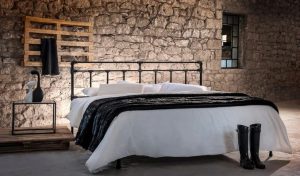
The Architectural Minimalist: Thin black iron or polished brass frames with no fabric at all, focusing purely on the silhouette.
In my experience, the minimalist approach is currently winning the hearts of the “Quiet Luxury” crowd. It provides the “wow factor” without the visual clutter.
Technical Considerations for the Perfect Install
Choosing a canopy bed frame isn’t as simple as picking a color. Because this piece is so dominant, a slight measurement error can make a room feel cramped rather than grand.
1. Ceiling Height and “The Golden Ratio”
I always tell my clients: Never put a canopy bed in a room with ceilings lower than 9 feet. Ideally, you want 10 to 12 feet.
-
The 12-Inch Rule: You should aim for at least 12 to 18 inches of breathing room between the top of the frame and the ceiling.
-
If the frame is too close to the ceiling, the room feels like it’s “suffocating.” If it’s too short, it looks like a cage.
2. Materiality and Weight
The material of your canopy bed frame dictates the “brand” of the room.
-
Wrought Iron/Steel: Provides a thin, sharp profile. Perfect for industrial-chic or modern farmhouse aesthetics.
-
Solid Oak or Walnut: Adds warmth and a sense of permanence. This is for the “Old Money” aesthetic.
-
Acrylic/Lucite: A personal favorite for smaller luxury “jewel box” rooms. Because it’s transparent, you get the structure of the canopy without the visual weight.
3. Footprint and Flow
A canopy bed takes up more “visual space” than a standard bed. You need to ensure there is at least 36 inches of walkway on either side. In high-end branding, luxury is defined by “wasted space”—the ability to have empty floor area is the ultimate sign of wealth.
Expert Advice: The “Hidden Warning” of Canopy Beds
Before you rush out to buy the most expensive frame you can find, here is an insight I’ve gained from years of post-installation feedback.
Pro Tip: The Dust and Light Factor
The top horizontal rails of a canopy bed frame are notorious dust magnets that are often overlooked by standard cleaning routines. If you choose a dark metal or wood, that dust will be visible from the bed looking up. Furthermore, be mindful of your ceiling fan or recessed lighting. I’ve seen many DIY designers install a beautiful canopy only to realize the ceiling fan blades strike the posts, or the frame casts a giant “X” shadow across the pillows from the overhead lights.
Customizing for the Intermediate Designer
If you’ve graduated past basic furniture sets and want to truly “brand” your residence, consider these advanced styling techniques for your canopy bed frame:
-
Integrated Lighting: I recently completed a project where we routed LED strips into the top inside channel of a matte black frame. It created a soft, ethereal glow that eliminated the need for bedside lamps.
-
Mixed Media: Don’t be afraid to mix a metal frame with an upholstered headboard. The contrast between the “hard” structure of the canopy and the “soft” texture of linen or mohair creates a sophisticated tension.
-
Sheer Layering: For a Mediterranean or coastal luxury vibe, use Italian linen sheers. The key is to use four times the width of the rail in fabric so it looks lush and gathered, not thin and cheap.
The ROI of a Statement Bed
In the world of real estate and high-end rentals, “The Money Shot” is usually the master bedroom. A canopy bed frame increases the perceived value of a home instantly. It photographs better than any other piece of furniture.
When a potential buyer or a guest walks in, the canopy bed signals that this room was designed, not just furnished. It creates an emotional anchor. You aren’t just selling a place to sleep; you are selling a lifestyle of curated comfort.
Quick Comparison Table: Selecting Your Frame Style
| Feature | Modern Minimalist | Classical Luxury | Global/Boho Chic |
| Material | Black Powder-Coated Steel | Carved Mahogany / Walnut | Natural Bamboo / Rattan |
| Drapery | None (Structural) | Heavy Velvet / Silk | Mosquito Net / Raw Linen |
| Best For | High-Rise Penthouses | Estate Homes | Tropical Retreats |
| Vibe | Sharp, Clean, Decisive | Timeless, Authoritative | Relaxed, Organic |
Conclusion: Claiming Your Space
Defining luxury in a residential setting is all about intentionality. The canopy bed frame is the most intentional piece of furniture you can own. It demands attention, provides structural beauty, and transforms a mere mattress into a destination.
Whether you are designing your “forever home” or looking to elevate a high-end rental property, remember that the bed is the heart of the house. Framing that heart with a canopy isn’t just an aesthetic choice—it’s an investment in the “brand” of your lifestyle.
What do you think? Are you a fan of the sleek, curtain-less metal frames, or do you prefer the traditional drama of draped fabric?
If you’re ready to transform your bedroom into a high-end sanctuary, I can help you narrow down the specific dimensions or materials that would work best for your floor plan. Would you like me to create a customized “Room Scale Guide” based on your specific ceiling height?