You are halfway through building a beautiful custom oak bookshelf. You drive a standard drywall screw into the joint, the drill impacts hard, and suddenly—crack. The premium hardwood splits right down the grain, or worse, the screw head shears off entirely, leaving a useless metal shank buried deep in the wood. I’ve seen this exact heartbreak crush the spirits of dozens of apprentices and DIYers over the years.
In my 10+ years of getting my hands dirty in the home improvement industry, I have realized that the tiniest components often dictate the success of the largest projects. Beginners usually pour all their money into premium lumber and high-end power tools, while treating fasteners as an afterthought. However, when it comes to balancing structural integrity, shear strength, and effortless installation, nothing matches the engineering brilliance of a premium wood screw combo drive system.
The Anatomy of Power: Why Traditional Screws Fail
To understand why a wood screw combo is a game-changer, we have to look at the physics of a fastening failure. Traditional Phillips-head screws were actually designed to “cam out”—meaning the driver bit intentionally slips out of the screw head when it meets too much resistance to prevent over-tightening in factory assembly lines. But when you are driving a fastener into dense lumber, cam-out is your worst enemy; it strips the screw head, ruins your driver bits, and destroys your workflow.
Think of a fastener drive system like the transmission in a sports car. If the gears don’t mesh perfectly, energy is wasted, parts wear out, and the car stalls. A combo drive (typically combining a square/Robertson recess with a traditional Phillips cross, or a Torx-combination) ensures maximum surface-area contact between your driver bit and the fastener head.
   Phillips Drive             Square/Combo Drive
   (Low Engagement)            (High Engagement)
        ┌───┐                       ┌───┐
     ▲  │ ┼ │  ▲                 ▲  │ █ │  ▲
     └──┴───┴──┘                 └──┴───┴──┘
  [Prone to Cam-Out]          [Maximum Torque Transfer]
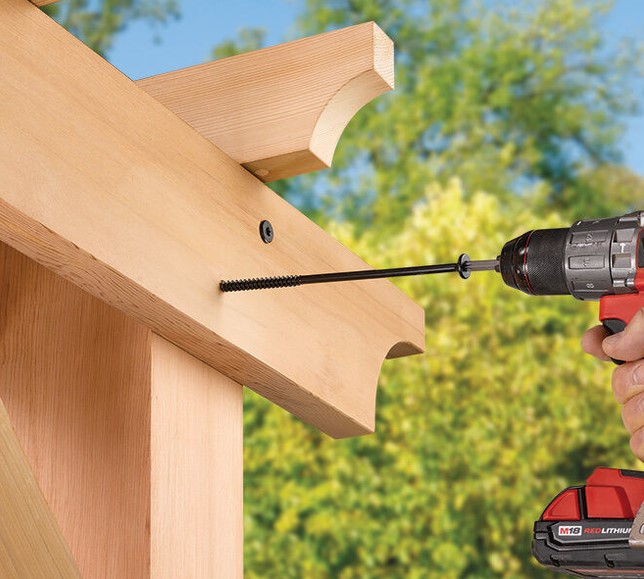
This structural engagement allows you to transfer immense rotational torque directly into the wood grain without the bit slipping or wobbling. For a intermediate builder working solo, this means you can confidently drive screws one-handed while holding a heavy framing timber steady with the other.
Technical Specifications of the Modern Wood Screw Combo
When evaluating a high-performance wood screw combo pack for your workshop, you need to look past the shiny coating and analyze the technical geometry of the fastener.
| Fastener Feature | Technical Purpose | Operational Benefit for Builders |
| Type 17 Drill Point | Slotted cutting notch at the tip | Cuts through wood fibers, eliminating the need for pilot holes |
| Aggressive Deep Threads | High pitch-to-diameter ratio | Maximum withdrawal resistance and holding power in softwoods |
| Smooth Upper Shank | Unthreaded section below the head | Draws the top board tightly against the base board (clamping force) |
| Nibbed Countersinking Head | Small cutting teeth under the bugle/flat head | Carves a clean recess so the screw sits perfectly flush or sub-flush |
Clamping Force and the Threadless Shank
A common mistake among beginners is using a screw that is threaded from the tip all the way to the head to join two boards together. When you do this, the threads catch both the top and bottom boards simultaneously, often leaving a tiny, permanent gap between them. A true structural wood screw combo features a smooth upper shank. This allows the screw to spin freely in the top board, pulling it down with massive clamping force against the structural frame below.
Coating Chemistry
Modern industrial wood screws aren’t just bare steel. Look for dual-barrier coatings like ceramic or epoxy-polymer layers. These finishes provide thousands of hours of salt-spray resistance, ensuring that the chemicals found in modern pressure-treated lumber won’t corrode your fasteners from the inside out.
Pro-Tips for Maximizing Joint Integrity
Over a decade on the job site has taught me that holding power is a science. Here is how you optimize your fastening strategy for maximum longevity.
💡 Pro-Tip: The Grain Orientation Rule
When joining timbers, never rely heavily on screws driven straight into end-grain (the open pores at the cut end of a board). End-grain has incredibly poor holding power, functioning like a bundle of loose drinking straws. If you must fasten into end-grain, use a longer wood screw combo with deep, aggressive threads, or pocket-hole joinery to catch the stronger face-grain fibers.
Grain Pre-Boring for Hardwoods
Even though modern combo screws feature self-tapping Type 17 points, premium dense hardwoods like Ipe, teak, or old-growth oak are exceptionally stubborn. To guarantee zero splitting near the ends of your boards, take 5 seconds to pre-bore a pilot hole using a bit that matches the inner root diameter of the screw shank. Your materials will thank you.
Hidden Pitfalls: What Can Go Wrong on the Field
Even with the best wood screw combo hardware in your tool apron, structural failures can happen if you overlook basic mechanical limits.
-
The Over-Torque Snapping Hazard: High-torque impact drivers make driving fasteners effortless, but they can easily exceed the tensile strength of standard steel screws. If your driver keeps snapping the heads off your fasteners, turn down the speed setting or adjust your clutch to let the screw seat gently.
-
The Mismatched Bit Nightmare: Combo drive heads are versatile because they can accept multiple bit types in a pinch. However, for heavy-duty structural fastening, always use the specific, recommended drive bit (like a dedicated #2 Square or specialized combo bit). Using a worn-out Phillips bit on a combo head defeats the purpose and will lead to stripping.
-
Shear Strength Overlook: Wood screws are built for pulling power and withdrawal resistance. If you are building a structure that supports immense vertical loads resting on a ledger board (like an outdoor deck), do not rely solely on wood screws. Use heavy-duty structural lag screws or thru-bolts to handle those massive perpendicular shear forces.
Engineering Your Projects to Last a Lifetime
Switching your inventory to a high-quality wood screw combo system is an investment in both your efficiency and your peace of mind. It eliminates the daily frustrations of stripped heads, split workpieces, and wasted materials. By choosing fasteners engineered with aggressive thread geometry, superior drive recesses, and advanced corrosion coatings, you elevate your work from basic DIY to professional-grade craftsmanship.
What project are you tackling next that requires rock-solid structural stability, and what fasteners are you currently planning to use? Let’s discuss your joinery strategy and troubleshoot your setup in the comments section below!